The Biggest Loads Of Hooey About Your Diet And Exercise

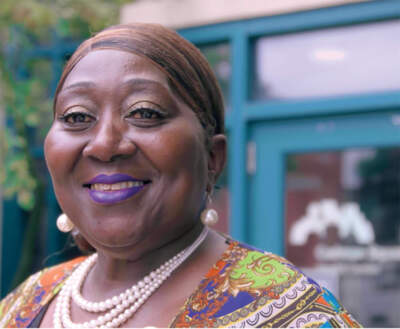
Author and health policy expert Timothy Caulfield

Author and health policy researcher Timothy Caulfield

I love a good debunking. And the new book “The Cure For Everything” is such a rollicking fiesta of health-related myth-busting that it could well have been titled “The Cure For Everything? Ha!”

Funny thing, though. Yes, the book’s author, health policy researcher and highly entertaining ham Timothy Caulfield, heaps evidence-based scorn on all sorts of flawed claims — by diet-mongers and hawkers of fitness gadgets and oversellers of genomics or colonics. But after we spoke a bit about those, he allowed that in fact, he has to admit, there is magic in the health sphere. There is an elixir that brings with it more health benefits than just about anything else we know.

Can you guess what it is? A clue: One of his sayings is that the road to better health is fairly simple, but that doesn’t mean it’s easy.

Tim Caulfield is an award-winning professor in both law and public health at the University of Alberta. His book is just out from Boston’s Beacon Press, and his opinions — some of which prompt plenty of what he calls “pushback” — are based on rafts of scientific papers and his interviews with leading experts. (The book also includes some vivid self-experimentation.)  Our conversation, lightly edited:

Among all the “twisted messages” you discuss, which do you consider most concerning, most dangerous? 

There are so many. It’s almost difficult to pick one health message. Let’s go for a big one: The idea that you can eat crap in moderation is a big myth, and I think that myth flows from the food industry. It builds on this “Everything in moderation” idea that we love, but in fact, if you’re eating a healthy diet, getting your fruits and vegetables, lean protein and whole grains, there isn’t a lot of room for crap. I’m not saying you can’t eat crap once in a while because God knows I do, but you shouldn’t view it as something you can do all the time.

The cure for everything

The other myth, one that’s been a little controversial, is the idea that you can use exercise as a primary means of weight control. Exercise is so important, so good for you, as I emphasize again and again in the book. So I’m not saying don’t exercise, for God’s sake, but it’s so difficult to use exercise as a primary means of weight loss, because we’re incredibly efficient eating and storing machines. We actually don’t need a lot of calories.

Again, I think industry and other forces want you to believe that we can do a little bit of exercise and reward ourselves with a cola or sports drink or chocolate bar, and you really can’t do that.

You have a really striking example in the book, of a woman who has run 18 marathons and put on one pound for each one. Wow. But what about the registries of people who lose lots of weight and keep it off? Don’t they all say they exercise at least an hour a day?

Exercise is part of the equation. Those registries are one example, and there are other, more clinical-trial-based studies that show that exercise is part of the equation and is correlated with keeping the weight off. But it’s a complicated story. Is it the fact that once you’ve lost the weight, and you’re an individual with the willpower to keep it off, you also adopt a healthy lifestyle that includes exercise?

I do believe exercise is part of the maintenance equation because it allows you to burn enough calories, but as a primary means of weight loss — and that’s a message you see out there particularly emanating from some of the big food advertising — it really is about calories in, not calories burned.

What other myths?

I get a lot of pushback on this one: Supplements. In general, if you look at the science, even if you look at the U.S. federal guidelines on food, they tell us that we don’t need a lot of supplements, a lot of vitamins. If you’re eating a healthy diet you should be getting all your vitamins and minerals from your diet. I’ve said that to audiences and I get incredible pushback; there’s this belief that we have to take supplements and vitamins, and of course there’s an industry element to that, there’s a huge vitamin and supplement industry.

 ‘This idea that you need to either detox or cleanse your body is just complete baloney.’ 

And there’s this belief that we live in a nurtrient-vacant world. Well, you do if you eat junk all day. Yes, there’s emerging evidence around vitamin D, around fish oil, omega-3 kind of stuff, but unless you have a clear deficiency you don’t, as a general rule, need to take supplements.

One more?

The “cleanse” thing, this idea that you need to either detox or cleanse your body, which is just complete baloney. There’s no evidence at all that you need to do that, and again, there’s a huge industry, but colon cleanses are dangerous and can be unhealthy.

Are there any twisted messages that aren’t particularly dangerous but just most get your goat?

The one that bugs me is stretching, partly because I don’t like stretching, but everybody has this belief you need to stretch and stretch and stretch, and there’s no evidence it’s good for you. In fact it can actually hurt your performance. You do need to limber up and put your body through a range of motions, but stretching for stretching’s sake is not that useful, and think of the number of hours we wasted doing that.

The other one that kills me, that just drives me nuts, is the idea of ‘spot reduction.’

The other one, which I don’t think is necessarily harmful, is this idea that there are certain foods that speed up your metabolism, allow you to lose weight. It’s a fantasy. There’s something to it — some foods satiate you more, make you fuller — but as a global way of losing weight or maintaining health, it’s not going to work. All the studies show that all the diets over the long-term work about the same, and unfortunately the news is kind of grim, a 90 to 95% failure rate. So you really need to adopt a healthy lifestyle that you can maintain. You can’t think of it as a diet.

The other one that kills me, that just drives me nuts, is the “toning” one, the idea of ‘spot reduction.’ It’s hilarious because I think people intuitively know it’s wrong, in their heart of hearts.

But strength training does change the shape of the muscles you’re training…

That’s true, but that kind of “Michelle Obama arms” thing, the idea that you’re going to “slim your arms” or “slim your tummy,” the spot reduction that you see in ads, it isn’t marketed as strength, it’s marketed as ‘you’re going to slim that region.’ And of course that twisted message comes from wanting to sell products, from the Suzanne Somers thighmaster right up to the most recent gadgets, and “spot reduction” is just a fallacy: Without losing the body fat you’re not going to do it.

There is a dose response. The harder you work, the more benefits you get.
–Tim Caulfield

It touches on a broader and more important topic, and that is our obsession with body aesthetics. Particularly when you first get started, you should be worried about health, not looks. In the mirror, you may not look different, but I can guarantee you that you’re going to feel better and be healthier by getting fitter.

Let’s talk about intensity. In her new book, the New York Times exercise columnist Gretchen Reynolds says in effect, ‘Just move, even just go for a stroll,’ and that’s a common public health message. But in your book, you take a somewhat different tack, emphasizing that the most efficient way to get health benefits is to do at least some vigorous exercise.

Gretchen Reynolds, I’m sure would agree with me if she were sitting here: There is a dose response. The harder you work, the more benefits you get.

There’s absolutely no doubt that from a public health perspective, you get the biggest bang from getting sedentary people active. My wife is a family physician and she says that to people: Just get active. In addition to that, I think being active all day long should also be a goal — taking the stairs and standing up. But the harder you work, the more of a benefit you’ll get, and the more efficient your workout is going to be.

Dose response is recognized in all the fitness guidelines that emanate from national entities, whether Canadian, the UK or the US. So it’s not like this is some kind of secret, but I do think there’s a fear of scaring people away. The idea that if you work hard, it’s tough and it’s going to hurt might mean you’re not going to do it. We have to get over that and recognize that hard work is good and fitness works by adaptation, so you’ve got to break down the systems in order to get benefits.

One study found food preparation listed as the most common form of what people consider ‘moderate exercise.’

I love to give talks about all our delusions about ourselves. A lot of people don’t realize what hard work is. People say ‘I do a vigorous workout’ when objective measures tell us it’s actually moderate, and people say moderate when it’s actually light. Something like 3 to 5% of Americans regularly engage in truly vigorous exercise. And one study found food preparation listed as the most common form of what people consider ‘moderate exercise!’

So I do think we can’t be afraid to embrace vigorous exercise. If you have any reason to think there’s a health issue with respect to working hard, you need to watch that and see a doctor, but I don’t think we should shy away from working hard. If you work hard, you get real benefits. Every expert I talked to, even experts who said they just want people to be active, repeated that theme.

I have to confess that I’m happy to hear you say that, because in my own limited experience, there’s some kind of magic in working out hard. It changes how you feel in a way that more moderate workouts don’t…(Yes, this is it, we’re finally getting to the magic elixir I mentioned earlier!)

What is the cure for everything? If I were forced, absolutely forced, to pick something, it would be vigorous exercise. There are so many benefits associated with exercise it’s just ridiculous. 

That exercise magic…What is the cure for everything? If I were forced, absolutely forced, to pick something, it would be vigorous exercise. It just has so many benefits.

Of course vigorous is relative. If you never worked out then going for a walk could be vigorous. Vigorous has to be viewed through the lens of the individual. But you’re right, I find when you do really challenging exercise, that’s when you start to see — and here I’m being a hypocrite, but for me, that’s when you start to see those really magical changes in how you feel, and the energy you have through the day, and even maybe a little bit of endorphins.

There are so many benefits associated with exercise it’s just ridiculous. And they just keep adding up and piling up, it’s like a mountain of benefits. It’s hard to believe everyone isn’t embracing it.

Back to ‘crap’ for a moment. I was particularly struck by a little family food diary you included to illustrate just how often in the course of a regular week we have ‘special occasions’ that seem to justify eating junk food. A neighborhood barbecue and a friend’s wedding, an end-of-school party with chips and soda, an end-of-soccer-season party with chips, soda and ice cream, friends coming to dinner and bringing ice cream and cookies, visiting grandparents who offer Fruit Loops and orange soda. So many ‘special’ treats that they’re nearly constant.

I thought of myself as a very health-conscious person who fed the kids nutritiously, and it’s shocking when you actually start seeing the amount of treats throughout the day — but more, the entitlement for treats. The idea that you’re supposed to get a treat.

The whole idea is to create this mentality that if you do a little working out, you can reward yourself with a bit of junk.

I was just at a 3-year-old’s soccer practice and the coach rewarded these little kids for soccer practice with a chocolate bar. It creates this idea of entitlement, and of course a lot of sporting ventures are sponsored by the food industry. The whole idea is to create this mentality that if you do a little working out, you can reward yourself with a bit of junk.

And then we have all the family, school and seasonal celebrations. There seems to be this expectation that you’re going to have a whole bunch of junk with your birthday, and every barbecue, and every single music recital. There’s this huge smorgasbord of crap everywhere you turn! I’m not saying you shouldn’t have treats, but why not healthy treats? And then limit those other kinds of treats to make them truly rare and special.

Overall, you’re basically advocating that we should be aware of the twisting forces behind the health messages we get. What should we be asking ourselves when we get a message?

This should not be depressing, it’s supposed to be liberating. You should ignore these twisted messages and focus on the simple way forward. You should ask yourself: “Is this a study done just in mice? Is it a real study? Has it been done in a university or done by a company? Are there profound corporate interests involved in the message that is being purveyed? Is this based on anecdotal evidence?

You should remember that people have been trying new diets and ‘breakthroughs’ for over a century and they haven’t panned out.

I’m very skeptical of the word ‘breakthrough.’ If you see that term you should be skeptical, it should be a red flag, particularly if it’s in the context of a diet and fitness routine. You should remember that people have been trying new diets and ‘breakthroughs’ for over a century and they haven’t panned out. They have not worked. There are no miracles. That should be your starting point, not that there is some miracle, like the raspberry ketones. I can’t believe that kind of stuff is taken seriously. I don’t view being skeptical as something negative. I see it as a curious point of view. It’s healthy and it can be fun to be a skeptic.

And one of the biggest things I advocate is that governments need to start embracing the value of   independent scientific information, and the trouble is that it is becoming increasingly rare, particularly with the push by governments all over the world to position university research as an engine of economic growth. That kind of robs university researchers of their role as a truly independent voice that can moderate the hype and cut through the exaggerated claims. So really look for those independent sources of information. I talk about the Cochrane Collaboration but there are others out there.

We call it ‘the hype pipeline.’ 

But what about the twisting forces at work on the university researcher?

Absolutely, there are twisting forces on the university researchers. We call it ‘the hype pipeline’ and it starts with the incredible pressure on university professors to publish — it’s a cliche but there is truth in the publish-or-perish mentality. I don’t think people do this intentionally but of course that forces exaggeration and certainly enthusiasm. And the universities themselves often hype the research more in press releases; that’s often when there is a speculative jump from animal studies to human applications.

Then it goes to the media and we’ve found the media can be surprisingly accurate, though with space constraints, important limitations are often left out. And then, of course, it goes into the market, where the research is hyped even further. Given all these twisting forces, I really think we need to strive to keep that independent university voice there, to allow the scientific method to nudge us closer to the truth.

You want to look for the voices that have the least amount of agenda in play.

But given even university twisting, whom can I trust?

Here’s one way to look at it: Everyone has an agenda. I’m no fool. I’m not naive. Whether it’s a university researcher or a corporation. But you want to look for the voices that have the least amount of agenda in play. And in our society in general, university researchers are meant to play that role. And it’s their job to play that role. There are supposed to be checks and balances that keep their research independent and unbiased. That’s what the scientific method is supposed to do.

To end on a mundane note. In the book, you describe losing nearly 30 pounds, mainly by — surprise surprise! — eating less. That was a couple of years ago — have you kept it off?

It’s funny — I was in a no-lose situation. If I put it back on, I could have said, ‘See how tough it is?’ But I’ve kept it off, and I really think it’s because I really tried to emphasize lifestyle changes I can maintain forever. And every time I feel myself slipping, I do another week of a diet diary just to check what I am actually stuffing in my mouth. I just feel like it’s a lifestyle now — it has become easier, much easier. Thankfully, the whole family is involved now. That helps too.

The first year after losing the weight, it was hard, really hard, and I got an immediate bump back of three or four pounds, and thought ‘Here it comes.’ But from that point, I’ve maintained it. I hope it continues…

  • Tired of it

    You can eat junk food in moderation because he does. That ended it for me. Soon they will tell you exercise is the cure for aids and cancer. I’m not saying it isn’t the best thing for a lot of things. It’s obviously important by design of nature but the truth is we already know this. And there are people who are not well enough to exercise. The healthcare industry is really losing ground with me these days.

  • Wisteriak

    Muscle confusion makes all the difference when exercising, in my opinion. 

  • L Morse

    I’m 54 and I’ve exercise in varying ways and intensities my entire life.  When I’ve had orthopedic/muscular types of ailments, I go to PT and do the exercises and recover.  I’m still running 12 miles a week, doing Pilates, yoga, weight training.  Although thin, developed hypertension at age 40 due to family history.  Doing Weight Watchers now to lose 15 pounds and get to a lighter weight although my BMI was still in the normal range.  Totally agree with vigorous exercise as being the “answer.”  It gives me so much more energy than other people my age, reduces stress, etc.  He didn’t mention stress above, but I’ve read that regular exercises causes your brain to change and be more adaptive for when stress comes and I’d agree with this.  Please don’t tell your daughters not to exercise – it’s so key to a healthful, energetic and positive life.  Find other doctors who will help you figure out exercise that you can do – I believe that many doctors are quick to tell people to stop running, etc, but I find doctors who work with me to get me back to running and realize I don’t want to give it up!

    • No knees

      You must still have cartilage in your joints.  I am a post-menopausal women and have been to many doctors, both orthopedic and endocrinologic.  The endocrinologists tell me to eat at least 1400 cal/day (yikes! I’d be over 200 lbs by now!) and “get used to my bigger body”.  The problem is that more weight leads to more pain/less mobility.  Fruit makes me gain weight.  I eat almost no carbohydrates, just 2 scopps Spiro-tein, 1/4 cup nonfat greek yogurt, 1 can tuna, 1 cup skim milk, lots of water.   If I substitue any of these foods with any type of grain or fruit, I gain weight.  Lots of vitamins or I get really tired.  I have found this the best way to minimize weight gain.  No nutritionists would work with me within my caloric range to try to find a healthy way to eat without gaining weight.   Btw, I eat the tuna in order to consume 3 TBSP of turmeric, which has done wonders for my shoulder.  I am almost shoulder pain-free and may begin trying to use it a little in another week or two.  Having been so active for over 30 years, I am now also fighting depression.  So I tell my daughters it’s not worth the price they will eventually pay.  After all, they have my genes.

      • Wisteriak

        Turmeric is really a fantastic anti-inflammatory. I also take a large dose of it per day. When I forget to take it, my injuries flare up again.

        • No knees

          How do you take it?  I’d to eliminate the calories from the tuna and yogurt that I mix it with.  I tried taking it in water, but it made me nauseous.  it’s really been a Godsend for my shoulder pain.  I wish it helped the knees. 

      • Dannsmith123

        Tuna has mercury in it and should only be eaten once a month, switch to chicken. Also sounds like you have thryroid issues. Get tested. 

        • No knees

          I don’t eat chicken or meat.  I don’t usually eat tuna, but it’s the only way I have found to take the turmeric without getting sick.  I’ve been tested for everything.  No thyroid issues.  Just menopause, according to the doctors.  Heart disease and destroyed joints notwithstanding, doctors advise eating and gaining weight over starving.  My cholesterol, bp are very low from 38 years of vegetarianism and 30+ years of heavy exercise, mostly long distance running.  I would love to eliminate the tuna, but then I won’t be able to use my arm.  Good point about the mercury.  Yet another thing to avoid.  I’m open to suggestions on how to get the turmeric down with fewer calories.  If I had to do it all over again, I would minimize the exercise.  I think it’s irresponsible to advise people to exercise heavily without warning them about what the future ramifications will be, especially for women.

  • Jomicallahan

    We Cleansed our house of the junmk food. Filled it with fruit and veggies and grains. Fight the battle of portion control. What comes in with the guests goes homewith them or goes out i n to the trash that night. Ice cream down the sink. No exceptions. Treat sugar with comtempt. Plenty of fruit and veggies. It works. I lost fifty pounds for more than one year but like a AA person, i take it one day at a time, every day is a chance to not exceed my calorie burn rate. I often am tempted and say to myself why would i throw away a day of burning calories to storing? Most of the tim e it works. I know i can only exercise to a limit as my knee is bad, my feet are flat, etc but i plug along on the treadmill and the track for walking.

  • No knees

    I have had all forms of exercise ruled out by three doctors because of injured knees, foot, and shoulder.  Heart disease runs in my family. I have been struggling with weight for three years now, down to 600-800 calories per day because I have no method of burning calories, but still gaining about 4 pounds per year.  I used to be a long distance runner and a swimmer.  Now I tell my grown daughters not to exercise or they will be doomed in their middle age.

  • Antonio

    This idea that you need to
    either detox or cleanse your body is just complete baloney.’

    ‘This idea that you need to either detox or cleanse your body is just complete baloney.’I agree with the above statement but I understand why there is so much
    confusion about this subject. I ‘ve tried a 7 days detox by Dr. Jensen, one of
    America’s foremost pioneering nutritionists. It promised to deliver an increase
    of my level of immune- system function, reverse health disorders and improve the
    overall quality of my life. I was skeptical but I gave it a try. I was very glad
    I did. I felt wonderful. Also I got rid of a chronic sore throat and I got rid
    of a two decades long stomach acidity that was forcing me to use antacids on a
    daily basis. Upon further research, I realized that my sudden health
    improvements were not caused by the colonics and the cleansing agents that were
    part of the program, but they were caused by the fast that was also part of the
    program. It seems that normally 70% of our immune system is busy in the most
    polluted part of our bodies: the bowels. When fasting, the bowels get empty,
    therefore the entire body gets 100% of the immune system working, instead of the
    typical 30%.

    It seems we already have statistically significant evidence of the effects of
    fasting because during WW II, in the concentrations camps, when there was a bug
    or flu going around, the well fed German guards would catch it while the
    prisoners that were kept with no food (but were not yet in the stage of
    starvation which occurs when the stored fat is gone) were immune.

    I understand that further studies about fasting would not be profitable for
    pharmaceutical companies. How do we get around this obstacle?

  • guest

    I think his take-home messages are: 1) if you want to lose weight, eat less and don’t eat junk, and 2) if you want to experience the best overall health benefit, exercise vigorously.  While I think the definition of ‘less’ is pretty obvious (not as much as you currently are eating), the definition of the words ‘junk’ and ‘vigorously’ are what seem to get people hung up.  So people argue over what’s ‘junk’ or bad for you, and argue over what constitutes vigorous, rather than simply eating less of everything.  Most ‘fad’ diets work by making you more cognizant of what you are eating, which usually makes you eat less.  Time and time again, studies have shown that the magic element in most diets isn’t what you’re eating, but the fact that you’re eating less of it.  I think we’re an  impatient society, and we want a quick, easy fix for our problems.  We want to be able to look in the mirror and tell based on appearance alone whether or not we’re healthy on the inside.  Unfortunately, it doesn’t work that way.  Curious what it is about this particular topic that has cutting edge researchers freely admitting how little they actually know, while minimally-informed lay people run around claiming to have it all figured out.     

  • Reasonable?

    I will have to check out the book to see how following are addressed (or not addressed).
    1. Carbohydrates encourage fat build up.
    2. Increased muscle mass burns fats.
    3. Saturated fats without carbohydrates do not increase cardiovascular disease risk.
    4. Sensitivity to gluten is quiet common.
    5. High intensity interval training has cardiovascular protective effects.

    I think all of the above are true and based on that limit carbs to fruits and vegetables, eat lots of fat and protein,, do weight training several times a week, and high intensity interval training once a week or so.

    I’ve lost fat, gained muscle and feel great.  I don’t feel that this is a gimick.  It’s uust a compilation of physiologic facts that think would work for many people.

    However we have this kinda nihilistic view that all diets are fads…..not quiet correct….in my opinion

  • Guest

    Excellent post. I especially thought his comments on vigorous exercise were interesting.  Maybe there is something to those P90x or “Insanity” workout routines.  Still, I think if I were to try one of those, I’d probably croak.