One Man’s Sedation-Free Colonoscopy (And Why You Should Try It Too)

By David C. Holzman
Guest Contributor

I’m one of an elite group of American patients. Only about one percent of us undergo colonoscopy without sedation. The big secret: it doesn’t have to be painful. And it’s probably safer than with sedation.

Like most Americans, I was ignorant of all of this until about a month ago. In my imagination, a sedation-free colonoscopy would have been painful indeed, the device snaking up my GI tract, pushing against my insides as it resisted the twists and turns. Then my best friend, Greg, who has made several suggestions that have resulted in distinct improvements in my life, suggested forgoing the drugs, as he had recently done.

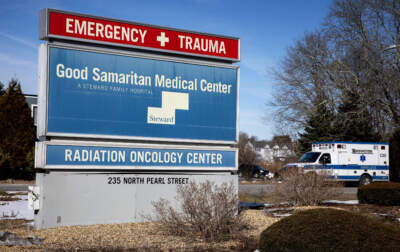
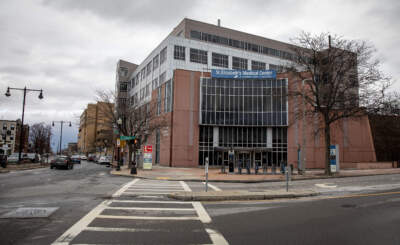
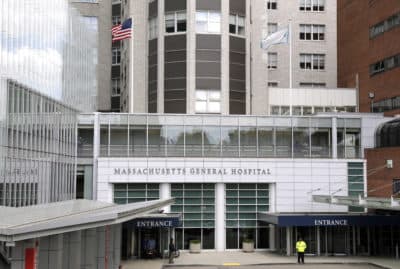
Gateway to the author's colon (Courtesy)

Gateway to the author’s colon (Courtesy)

It made sense. I could drive myself to and from the hospital, and I’d be able to work when I got home.

Greg had also told me that there’s a correlation of anesthesia with loss of memory later in life. Some googling revealed that this may be true in some cases. But despite that uncertainty, that made the unmedicated colonoscopy far more compelling.

It helped to learn that Dr. Douglas Horst, who would be doing the colonoscopy, did a number of them unsedated, and even more, that he called me to discuss it, putting my mind even more at ease. (He gets top grades on several different doctor evaluation websites.)

And overall, the discomfort was minimal, hitting maybe 3-max out of 10 on the pain-meter for seconds at a time here and there, and otherwise never going beyond 2 out of 10, comparable, perhaps, to a very mild cramp. I’d much rather have another colonoscopy than an upset stomach.

The Prep: Dystopian Poison

Far worse than the colonoscopy was the “prep.” And the really bad part of the prep was the drinking of the laxative. At 7pm the night before the colonoscopy, and again at 4:30 in the morning, I had to drink 15 ounces — two cups — of the supposedly lemon-lime flavored magnesium citrate. The prep sheet from Beth Israel Deaconess Medical Center in Boston recommended putting it in the icebox prior to use, to blunt the taste, which they suggested because chemical reactions, including those involved in taste, proceed more slowly at lower temperatures. I went one better. I stuck the bottles in the freezer for the last 45 minutes. But even with ice beginning to form in the bottles, the taste was still strong and dreadful. The drink combined the wonderful fizziness of soda — the elixir of the summertime American childhood — with a cloyingly sweetened base metallic taste. There are plenty of bad-tasting medicines, but that juxtaposition of good memories with sweetness gone sickly made this stuff seem like a post-apocalypse dystopian poison.

During the 7pm episode, it took me an hour and a half to down the two cups’ worth, washing each bit down with some ginger ale in a largely vain attempt to banish the dystopian aftertaste. During the 4:30 am episode, I tried chugging it down more quickly, but it still took 40 minutes.

The magnesium citrate had to be followed with at least three normal-sized cups (24 ounces) of clear liquid, to maintain hydration in the face of the saline onslaught. The prep sheet warned that failure to do so could endanger your kidneys — just one more thing to go wrong if you failed to follow the directions in the middle of the night.

Ironically, my biggest fear—the fear that had kept me from getting the colonoscopy for the first nine years after I turned 50, was the vision I’d had of being a prisoner in the bathroom while my guts violently wrung themselves out for hours on end. Yet, the diarrhea, which began after about an hour of drinking the gag soda, was not the least bit gut-wrenching, and not particularly copious — thanks probably to the day of fasting. During the hour and a half or so that it continued, it quickly became liquid, and gradually became clear (your results may vary). While I’d set out magazines and books on the little table, as well as a radio, figuring I wasn’t going to leave the bathroom for a couple of hours, I found I was able to move around the house with impunity.

The Procedure: Up Mine

After a few more hours of sleep, I got up, and drove the 35 minutes or so in mild traffic from Lexington into Beth Israel, arriving around 9:30. I’d been afraid I might need to go to the bathroom on the way in, but the diarrhea was over.

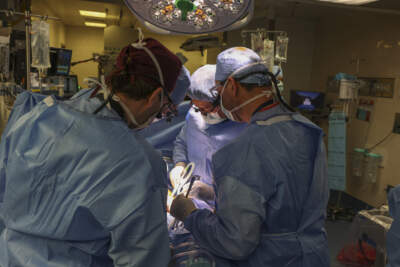
At 10:45, Nurse Tina DiMonda rolled me into the procedure room. She installed an IV — just in case — and asked me to lie on my left side. Then, Drs. Douglas Horst and Byron Vaughn began feeding the colonoscope inside my plumbing.

In our society, and perhaps generally among our species, the rear end carries a lot of baggage, as is obvious from the various epithets and other expressions that have the word, “ass” in them. This is not helpful in the medical theater. But between my own blasé attitude, and the docs’ and Nurse DiMonda’s excellent bedside manner, during these proceedings the anal orifice became a mere porthole into the gastrointestinal plumbing. Mine might have been exposed, but it was totally safe, and I soon forgot about it, despite the fact that it was propped open, mildly uncomfortably, by the colonoscope.

(TipsTimes/flickr)

(TipsTimes/flickr)

Dr. Horst immediately launched into some jokes, and soon I felt as if I’d gone to a bar with some friends. Of course, there were some major differences, such as the spectacular view on the screen of the pinkish tunnel with the skinny ridges encircling the passageway, looking the way one might imagine a hallway down the inside of a segmented worm. What is the evolutionary reason for the ridges, I wondered. Dr. Horst said he didn’t know of one, but he’d come up with a theory if I could write it up and make him famous.

Soon, a small clump of tiny white things appeared, adhering to the inside of my colon. “Did you take a capsule?” Dr. Horst asked. “Niacin.”

Now we were approaching the first of four sharp bends in my colon, and I could feel my insides being stretched. Although the discomfort may have reached a mere 3 out of 10 on the pain-meter, it’s always more unnerving when you can’t see the source.

Now we were approaching the first of four sharp bends in my colon, and I could feel my insides being stretched. Although the discomfort may have reached a mere 3 out of 10 on the pain-meter, it’s always more unnerving when you can’t see the source, even if you know what it is.

I began making noises like those that Tigger had made when the Pooh Corner gang, trying to figure out what Tiggers eat, had tried thistle on him. Tigger, undoubtedly discombobulated by the thorny stuff sliding down his insides, had said, “Warawarawarawarawara.” A.A. Milne had his onomatopoeia down pat; and the docs knew what I was talking
about, and slowed down, maneuvering carefully around turn #1, mitigating my discomfort. Then we were off on another
straightaway.

A Bend In The Road

A later sharp bend in the colon occurs where the plumbing approaches the surface of the stomach from the vertical, and then turns 90 degrees to run parallel to that surface. Tina put her hands flat on my belly, pressing gently, a maneuver which prevented that unsettling stretching within, the docs rounded the bend, and we were off on another straightaway.

The rest of the half hour long spelunking expedition was uneventful, with occasional unsettling, mildly uncomfortable moments, particularly at the sharp bends, and at one point, a mild burning sensation in my anus, which turned out to be insufficient lubrication, a problem which was quickly remedied. As for the inner terrain, the cleansing had been so successful that even in the upper reaches, almost nothing was visible except for the shimmering surface of my colon, which was devoid of even tiny polyps. (Healthy colons are thus, even on 90 year olds, because the epithelium gets replaced about every three weeks, said Dr. Horst.)

Congratulations All Around

At the end (oops!), the docs and Nurse DiMonda congratulated me for how well I had tolerated the proceedings. Then we talked about the factors that influence an unsedated patient’s experience. It’s partly the doctor’s skill in guiding the colonoscope in a sensitive manner, said Dr. Horst (a skill which a doctor who has done few or no unsedated colonoscopies is unlikely to have). And it’s partly the patient’s pain tolerance. Some doctor-patient combos have great success, and others fail miserably, according to blog comments on the subject.

The caecum, colon and rectum(Images From the History of Medicine/National Library of Medicine)

The caecum, colon and rectum (Images From the History of Medicine/National Library of Medicine)

Another factor is patient expectations. I’m not particularly pain tolerant. But Greg had primed me not to expect pain. And studies show that expectations have a profound influence on pain, or lack thereof.

Moreover, I’d had my own prior experience with an analogous, though not identical procedure. In ‘98, I’d undergone a “colonic irrigation,” a sort of a new age cleansing to which all sorts of interesting claims were attached, for an article I wrote in an alternative medicine journal. There was plenty of internal pressure as my colon filled with water, and at the time I described myself as feeling bloated, as if I had mild to moderate indigestion — not what you would call a daunting experience.

It’s worth noting that the extra care that must go into an unsedated colonoscopy to avoid hurting the patient probably makes complications, such as a tear in the colon, less likely. But “since complications are rare, it would be hard to assess,” says Dr. Horst.

Not For Everyone

Interestingly, most institutions don’t even offer unsedated colonoscopies, although some will provide them if asked. Even when I came in for mine, everyone I came into contact with beforehand — a couple of nurses, the receptionist — was surprised when I told them I wasn’t getting sedation. (Probably not unlike the experience of some pregnant women who decide to forego drugs during labor and face skeptical hospital staffers.)

Dr. Horst says he performs about two to five percent of colonoscopies without sedation, “higher than the general rate because I have a small reputation for success at that.”

“Of those who start [a colonoscopy] without [sedation], probably 80 percent finish without, which reflects a self selection process — return patients who did it without meds before, and patients interested in and therefore pre committed to doing it,” says Dr. Horst. “Many years ago, I did a study. I offered unsedated scopes to all my patients. 200 patients later, 120 accepted the concept, but 50 percent of those who tried decided to take meds during the test.”

Still, Dr. Horst’s figures, and the fact that in Europe very roughly half of all colonoscopies are unsedated, suggest that far more people would be happy to forgo sedation. For doctors, the unsedated procedure is slightly slower, and more difficult. And for the hospital, and/or the insurer, it’s in the hundreds of dollars less expensive.

Although I had looked forward to a full afternoon of hard work after the colonoscopy, I conked out soon after I arrived home, and had someone not called me an hour later, I think I would have slept all afternoon. It’s not surprising. I’d spent two and a half hours on prep in the middle of the night, and the stress of quaffing the magnesium citrate had undoubtedly further drained me. Nonetheless, when I have to get my next colonoscopy, 10 years from now, I’ll definitely opt out of sedation.

David C. Holzman writes from Lexington, Mass., on science, medicine, energy, environment, and cars. He is Journal Highlights editor for the American Society for Microbiology and won a Plain Language/Clear Communication Award in 2011 from the National Institutes of Health.

  • jrice

    I’ve finally found a gastroenterologist nearby who will do a unsedated colonoscopy because I do not tolerate anesthesia well. In 2011 I had carpal tunnel surgery with only local anesthesia and recommend it. Thanks for sharing.

  • me10544

    Thank you, thank you, thank you. I came across this post a few days ago when I was freaking out in advance of my first colonoscopy. I am not a hero nor do I try to play one during medical procedures. However, I do want to stay of clear mind – call it a female-wanting-control kind of thing.

    Your post helped me find the strength to go sans sedation today. I opted to get a ride to the office in the event that I chickened out but felt I could do it. The nurse that checked me in was great but the nurse that assisted during the procedure was not a treat. I’m pretty sure she thought I was trying to be a hero and was very cold to me. Both nurses and the doctor asked repeatedly if I was sure that I didn’t want sedation and stated, “it isn’t general anesthesia”.

    Within 25 minutes we were done. Done! It was uncomfortable and at one point I winced, but I did it. The nurse and doctor congratulated me and said I was brave. I think what they were really thinking is that they would never do it without sedation – not so much that I was brave.

    I found it funny that the nurse in the recovery area had to take a few minutes to figure out how to edit her normal discharge instructions since I opted for no sedation. In fact, she said that she would guess that less than 5% of people go without sedation. It’s hard to believe that after the experience.
    After 5 minutes and a few embarrassing toots later, I was able to leave. The doctor said I need to book another colonoscopy when I turn 50….I can handle that…I’ve got 16 years to go!

    Thank you again for sharing your story as it gave me the strength I needed!

  • Tim

    I recently had my sixth colonoscopy and I have never wanted to get sedated in any of them. Two were done in USA and the rest here in Finland. In USA, the doctor was surprised that I did not want any drugs and the doctor here was rather surprised that anyone would even need them. Here they also do not see any need to continuously monitor the blood oxygen or the heart rate. It simply is not necessary as no drugs are administered. After all, the prep is the hardest part of it all, drinking the fluids and not being able to eat almost anything for a day or so. During the actual procedure, the only discomfort I had ever encountered was the bloating as air was pumped in to allow the device to proceed. Even that part was reduced to almost nothing the last time around when, instead of regular air, the doctor used carbon dioxide for the same purpose. No bloating feeling at all, quite amazing. This whole experience is so much easier than any dental procedure, by far. In my opinion, if anybody has any painful experiences with this, drugs or no drugs, they better change the doctor next time.

  • krvabob

    Had a sedation-free colonoscopy Tuesday. Showed up at 8am, procedure at 9, was home eating by 10:30. No real pain….just a bloated, cramping sensation that was easily tolerable. Doctor and nurse were wonderful about keeping me engaged in conversation, taking my mind off the discomfort. I’ve had Versed for other procedures, but try to avoid it, since it results in a full day of recuperation (and for many folks, vomiting). If you can put up with 20 minutes of mild unpleasantness, non-sedated is the way to go.

  • steve

    I just completed my first ever colonoscopy and I chose to do it without sedation. The staff told me what to expect and what to do when I experienced any discomfort. When the doctor reached the area that was supposed to cause the greatest discomfort it turned out to feel no worse than a mild cramp and it was over quickly. The greatest benefit of not being sedated was watching the procedure on the monitor and having the doctor point out various structures in the bowel. The amount of dialog I had with my doctor made the time go fast and it was over in no time. There is no doubt that my next colonoscopy will be done without sedation, and yes, the prep was was the worst part.

  • Gus

    I had a colonoscopy today unsedated and it was absolutely fine. I called my best friend a few nights ago, who is a is a Gastroenterology doc and although he did not tell me what to do, when I asked questions about sedation he said that he does a small percentage of procedures without sedation with no issues. He told me that I might find it uncomfortable from the air used to inflate the colon and maybe at a few sharp turns. I also read this and a few other blogs and decided to go drug free.

    I thought about my friend and how much respect I have for him and trusted what he said. The nurses were kind and supportive and my Doc was great, and I decided to put my trust in them. I got to talk to the nurses and Doc during the procedure and watch it on tv. Slightly uncomfortable at times, but I just remembered what my wife said “it’s just a small camera up your butt.” And for anyone who has watched a child being born (or given birth) this does not even compare.

    I usually do not comment on blogs, but I found this one helpful and hope that I can add my experience and maybe help someone else making a decision about whether to be sedated or not.

  • bananas

    It is interesting to me that no one else has reported having a similar experience after the procedure was finished. See below – I could not hold down anything, even sips of water, for about 18 hours afterwards. I’m curious how frequently this happens to people. It was easily 10 times worse than prep: after 24 hours of only clear liquids, 22 hours of nothing! PLease share if you’ve had a similar reaction.

  • Martian Minisculio

    I’m always puzzled by reports of intense trouble with the prep. Pain is very variable, I know, as people have different “pain thresholds,” but the prep doesn’t involve pain. Neither I, nor my partner, who has to have them every year or two, nor anyone I’m close enough to to discuss colonoscopies (kudos to Mr. Holzman for talking about it to all of us!) has anything like this hellish tale of prep to tell, nor is the taste of the flavored magnesium citrate so awful to them. (The stuff you had to drink, in greater quantities, before the mid-90s, was admittedly a different story.) It takes me about one minute to drink it, as opposed to the writer’s 90 minutes! I mention this because many people reading this story about the prep will be so put off they’ll never get around to that colonoscopy, sedated or not.

    • David C. Holzman

      It’s good to get your perspective on the mag citrate. Maybe some people won’t find it that bad. Maybe yours had a better flavoring.

      • sj

        The prep was bad for me, the worst part. I have reflux, and almost immediately the solution caused a major reaction. I also experienced nausea, which made drinking the solution extremely uncomfortable. By the end, I was in great discomfort. The diarrhea wasn’t bad, and the colonoscopy (with sedation) turned out to be the easiest part. I was told that a pill that can be swallowed is in the works, but several years away.

  • bananas

    If only I had known this was available! I never asked – or maybe never listened. Yesterday I had the identical procedure at the same hospital. I found the prep pretty miserable but it went more easily for me than you. The terrible part came right afterwards – I vomited the little cup of apple juice the nurse gave me post-procedure, got home and made a light snack which I vomited, tried drinking a little tea 3 hours after that and vomited, then tried warm water which came right back up. Finally I decided to give up and sleep. I was fantasizing I’d have to call a friend to take me to the ER for an IV to keep me alive, but around 3 a.m. I woke and found I could hold down a little water! At 5 I dared a soft boiled egg! I’m going to survive this. I’m certain this was a reaction to the sedation. And I know I could have managed without it, having had natural childbirth and doing well at the dentist’s without novocaine. Imagine if I’d read this piece a couple of days ago. A lesson for the future. Thank you.

  • jtilbe

    No doubt there would be fewer perforations among sedation free colonoscopies.

    When I had my first colonoscopy it started with light sedation. But the doctor. was so rough, causing so much pain, he ordered more drugs to knock me out completely. I think some doctors rush through the procedure. A recent article showed very different statistics among doctors regarding the number of polyps found / missed and the number of perforations. I wish all doctors who do colonoscopies would release their statistics.

  • riverwaif

    I had unsedated and, though it is claimed to be more painful for women than men, found the pain tolerable and, like your experience, coming in short waves. What I unfortuantely did not experience was a suppotive nursing staff…they treated me like I was a side-show freak for refusing sedation and were clearly displeased when I uttered any “wa-wa” sounds…one technique I use for coping with pain.

  • Donna Maderer

    Wow — good to see this. I’ve had a couple of friends who’ve said the procedure was mind-bogglingly, horrifically painful even under sedation (mild sedation). I’ve had another couple of chums who didn’t have sedation and said ‘it’s just mildly uncomfortable.’

    I too found the prep the worst part of the whole experience but I opted for the drugs and slept through the whole thing.