Daily Rounds: Suicide And The Disabled; The Cost Of Longer Life; More Mumps Shots; Call For New Drug Lab Probe

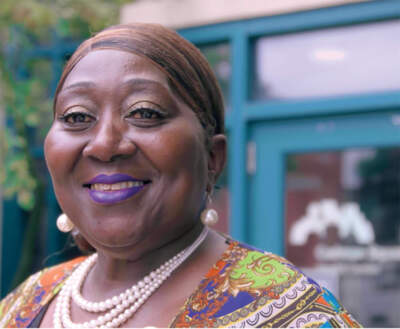
Suicide By Choice? Not So Fast (The New York Times) — “If nobody wants you at the party, why should you stay? Advocates of Death With Dignity laws who say that patients themselves should decide whether to live or die are fantasizing. Who chooses suicide in a vacuum? We are inexorably affected by our immediate environment. The deck is stacked. Yes, that may sound paranoid. After all, the Massachusetts proposal calls for the lethal dose to be “self-administered,” which it defines as the “patient’s act of ingesting.” You might wonder how that would apply to those who can’t feed themselves — people like me. But as I understand the legislation, there is nothing to prevent the patient from designating just about anyone to feed them the poison pill. Indeed, there is no requirement for oversight of the ingestion at all; no one has to witness how and when the lethal drug is given. Which, to my mind, leaves even more room for abuse. To be sure, there are noble intentions behind the “assisted death” proposals, but I can’t help wondering why we’re in such a hurry to ensure the right to die before we’ve done all we can to ensure that those of us with severe, untreatable, life-threatening conditions are given the same open-hearted welcome, the same open-minded respect and the same open-ended opportunities due everyone else.”

The Cost Of Living Longer (The Wall Street Journal) — “The average rent at assisted-living facilities, which provide help with day-to-day activities but not necessarily round-the-clock skilled-nursing care, shot up 17% to $3,486 over the past five years, according to the study. That is based on facilities offering six to nine services. The price of a private room at a nursing home, meanwhile, rose 4% over the past year to $248 a day. And while prices for home-health aides and adult-day services didn’t rise, on average, the brief respite comes after increases in recent years. Home-health-care spending by Medicare beneficiaries, for example, climbed 129% to $19 billion from 2000 to 2010, according to a March report to Congress by the Medicare Payment Advisory Commission.”

To Stem Mumps Outbreak, Doctors Try An Extra Vaccination (NPR) — “But mumps spread so widely within the Orthodox Jewish communities in these areas that public health officials concluded that a quarantine, the usual response to a mumps outbreak, wouldn’t work. So they tried something new. After receiving approval from the New York State Department of Health and the Institutional Review Boards at the Centers for Disease Control and Prevention, the officials administered a third dose of MMR vaccine to children who hadn’t yet contracted the disease. Why didn’t the standard two-shot dose of the vaccine protect the children? Public health officials, who published their findings in this week’s New England Journal of Medicine, say it was the unique style of study in yeshivas, religious schools for Orthodox Jews. In a yeshiva, students are paired up in partnerships called chavrusas. The two students in a chavrusa share the same desk and the same book and engage in a vigorous dialogue about the day’s lesson. Throughout the school day, which lasts up to 15 hours in a yeshiva, the students rotate among different chavrusas, changing their study partner each time.”

AG Martha Coakley Calls For Independent Probe Of State Drug Lab Policies And Procedures (The Boston Globe) — “Attorney General Martha Coakley is asking the governor to appoint an independent investigator to review the policies, practices, and oversight at the state laboratory in Jamaica Plain where a chemist’s alleged mishandling of evidence has thrown thousands of drug cases into question. The attorney general’s office wants to focus on a criminal investigation of Annie Dookhan, the diminutive chemist from Franklin at the center of the drug lab scandal, and let the independent investigator conduct a broader look.”