Parents Of Mentally Ill Children: ‘We Don’t Tell You And Here’s Why’

In the wake of the Newtown shooting, a blog post titled “I am Adam Lanza’s mother” went viral. It captured one mother’s anguish over having a mentally ill and violent child, and WBUR’s Martha Bebinger reported further on the topic in this powerful piece: Newtown shooting raises fears among parents of troubled children.

Below, Lisa Lambert, the executive director of the Parent/Professional Advocacy League — subtitled “The Massachusetts Family Voice For Children’s Mental Health” — eloquently describes the public silence that usually prevails among those parents in the face of widespread stigma and hostility, and the damage it does.

By Lisa Lambert
Guest contributor

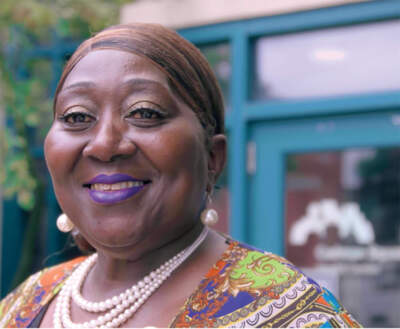
Lisa Lambert of PPAL

Lisa Lambert of PPAL

The best way to get help for your child with mental health issues is to talk about what’s going on. But most of us don’t, especially not at first. Adam Lanza’s mother, Nancy, was reportedly quiet about his problems. She was happy to talk about gardening, the Red Sox and her hobbies. But she was quiet (publicly at least) about her son. I have been, too. We learn to be.

Even among parents who have kids with mental health problems, many cringe at the idea of exposure. Liza Long’s stunning post,” I Am Adam Lanza’s Mother”, has prompted many parents to worry that she has exposed her 13 year old son to public scrutiny and taken a terrible risk. Other parents pour out their own stories, feeling the risk is nothing compared to the pain of dealing with mental illness all alone. I have been both kinds of parents – the one who keeps quiet and the one who shares her child’s story.

When my son was in elementary school, he was sometimes violent, explosive and unpredictable. His mind, his focus and his mood would shift and nothing could interrupt the explosion. Believe me, I tried. All I could do was send his younger brother to his “safe spot” and manage things the best I could. For reasons none of us understood, his brother was often the target. I worried for years that I would get a call that the state had removed my younger son because his older brother broke his arm or hurt him grievously. I went to all the best experts who speculated that maybe he was angry because his brother was “normal.” Why then, did he attack me too? And why did he also harm himself?

No one was ever sure about the why of it and we learned to live with the mystery and uncertainty. When he was a little older, my son was able to tell me that every day he woke up feeling emotional pain and most days it was simply horrible. When he exploded or when he hurt himself, it was like bursting a balloon, he said. The pain went away for a while. As he grew older, he hurt himself more and others less. He reasoned that it was morally a better thing to do. As his mother, I was still anguished.

When this first began, I told other mothers about it. They were the parents of his friends and had known him since he was a baby. Some of them would try to make me feel better. “All brothers fight” they’d say, “Yours are just more intense.” Some would look at me with horror or, worse yet, tell me to try things that I’d done long ago and found pretty worthless. It was clear that they thought it was either my skills or persistence that needed shoring up. I learned to avoid these discussions and got pretty good at deflecting questions. I learned to be quiet.

It isn’t just friends you are careful with. It’s your child’s teachers, his pediatrician and many others in his life. We all live in a society where the stigma around mental illness can stop us in our tracks. It’s far more serious than a lack of understanding. People repeat things to you that cut you to the quick and you learn not to tell them what you are going through. Instead, you talk about the Red Sox and gardening.

Then we turn to the mental health professionals, who we think, have seen all of this before. We learn once again, that we are often on our own. Insurance pays only for short visits with lots of paperwork requirements. There is a shortage of mental health professionals with expertise on the most “serious” kids. Parents like me are told, “I’ve done all I can for your child” and we observe he is not much better. We learn to manage the crises, lower our expectations of help and keep going because we know the burden falls on us in a way that would be unthinkable with another kind of illness. I’ve read that Adam Lanza’s mother found that only she could defuse his crises. I’m sure that’s what she did until she couldn’t any more.

Finally, if we are lucky, we find other parents like us. For many it’s both difficult and a relief to say my child is out of control or hurts himself or can’t seem to succeed. But this time the other person says, “Yes, I know. It’s like that at my house, too.” We share, we cry, we laugh. We applaud each others’ successes and commiserate over the failures. Most of all we brainstorm, we point each other in the right direction and we slowly make progress. And we are not quiet. At least not until we leave the room.

After a profound tragedy such as the shooting in Newtown, Connecticut, talk turns to ways to identify the next Adam Lanza. To do that, we need to be able to talk about our children and our families and receive back compassion, understanding and good advice. Until that happens, many of us will stay quiet.

Note: This piece is re-posted by permission; it was first posted on the PPAL blog here. And one of the responses there proved its point all too perfectly:

Earlier this week, I responded to a fb posting from a friend discussing the blog post “I am Adam Lanza’s Mother”. I did open myself in the post that I have two children with mental health needs and mentioned that I have a 13 year old daughter that has recently talked about suicide and cutting although the violence is towards herself, not others. One of the reply comments was from a friend of a friend – I read his profile – he is a 30 something male – a well, educated, father of a two year old. He commented that he will do anything to keep his precious child safe and… nothing personal… but he wants his child to have nothing to do with children like mine. The time has come for children like mine to be separated from children like his and put back in institutions and educated separately so his child can grow up safely. Its that kind of stigma that keeps us silent about our children’s mental health issues.

  • Bill Lichtenstein

    Lisa:

    The effort to get parents and other people to speak out about their mental health issues, which you promoted in your article, is a critical one and has been ongoing for the past 30 years. Along with groups that grew up to support that effort, like NAMI and DBSA, I and Lichtenstein Creative Media have been a central part of that by using the media to reach people with destigmatizing stories and messages.

    That’s always been helpful and remains so.

    At the same time, there was a firestorm over my Sept. 9, 2012 Sunday New York Times article revealing the horrific abuse of my daughter in Kindergarten in Lexington MA, and kids in schools, mostly kids with special educational needs, and then a firestorm after Lexington denied that any of it had happened (see the error filled Boston Globe article “Lexington Denies Locking Child in Closet” at http://www.bostonglobe.com/metro/2012/09/10/lexington-schools-chief-disputes-father-account-child-mistreatment/CimCQnm7UGzeet8pw3aVyJ/story.html)

    This led to more parents coming forward with stories of the abuse of their kids in Lexington and elsewhere. All the while, I think it’s fair to say, PPAL put its head down and stayed clear of the situation. Even when I called asking only for PPAL’s help in finding a room where parents in Lexington whose kids were abused could meet with other local parents in the community who were confused about the various accounts of abuse and the school’s denials, no assistance from the group was forthcoming.

    As someone who spent a considerable amount of time on the PPAL board, it’s something I question, Lisa.

    It’s easy to tell parents to speak out; it’s hard to defend those who do who get slammed, attacked, and, yes, as in my case, libeled.

    The issue of retaliation right now is the cutting edge for parents who want to help their kids with special needs in schools. This is the big opportunity to help, but I don’t see PPAL stepping up to the plate. I hope it will.

    In the wake of the CT shootings, we clearly need fewer guns around and we need more parents and others seeking mental health care for themselves and their kids when needed. But we also need an end to children being tortured (Rep. George Miller’s word, not mine) in schools by restraints, seclusion rooms and other means. Was Adam Lanza one of those kids? The Middletown, CT “scream rooms,” which I wrote about in the NY Times, where kids were locked in a closet and were banging their heads against cement walls until they were bloodied, is not far from Newtown, CT. If Adam Lanza had been restrained or kept in a seclusion room, it wouldn’t explain or excise the monstrous acts he committed, but it would raise another question about how we treat our kids. It’s one that PPAL should be asking. And if I haven’t convinced you here that PPAL is not doing enough in this area, just take a look at the beginning of this ABC Nightline story that followed my NY Times expose: http://abcnews.go.com/Nightline/video/deadly-discipline-students-hurt-dying-restrained-17843767 A young boy is electro-shocked at a school within the state of Mass., the state PPAL serves. What are we doing about that situation? Are you unable to get involved given your largely state funding? As someone who spent considerable time on PPAL’s board trying to help the group help kids and families, I think these are not only critical but historic issues we are facing involving an American education revolution that ironically seems to have started in Lexington, MA. Please step up to the plate and start swinging. You certainly have the team and talent at PPAL to do it. BL

  • Themother

    I keep quiet because so far I have not found a professional who does NOT treat my family member as if mental illness is a CHOSEN condition. When treatment wasn’t effective and the suicidal and homicidal fantasies continued, worsening with each increase in dosage, my family member was told “you have a psychological resistance to healing.” I finally entered school, earning my Masters degree in a mental health field at age 50. I got my family member off ALL medications and on nutritional supplements. The fantasies have stopped. The depression is still there, but it is not debilitating.

    After my experience as a patient’s family member, then in Grad school, and later working in the field for 4 years, I have come to realize that the mental health industry is just that. There is no incentive for really helping, and they reject all non-prescription psychotropic medications.

    Until the “professionals” understand that mental illness is not something a person chooses, and starts treating these people as the victims of the insidious illness that it is, they will continue to be labeled as “evil” and treated that way.

    Why would anyone speak up and expose their loved one to that?

  • sjw81

    we had no mass masacres or shootings , prior to the 1980s when we shut down these mental hospitals and de institutionalized all these walking time bombs. and now we give them video games to train on, and assault weapons at walmart.

  • realistic

    I feel for your kid but you have no right to endanger anyone else. lock these kids away.

    • http://www.facebook.com/nancy.westmoreland3 Nancy Westmoreland

      1 in 4 people have mental illness and most are not dangerous, unless they are also abusing substances. Educate yourself before speaking. God help you if you ever have a child or relative with a mental illness that you watch disappear before your eyes. The laws need to change for people to get the help they need and to keep society safe. These are human beings we are talking about with families. Bring change 2 mind is where you need to go look. The laws make it almost impossible to get treatment for these people, real treatment. Yeah, let’s lock up another 2.5 ( Minimum) million people, that is really the solution.

  • isarose

    NAMI is a wonderful resource for families of the mentally ill. I attended a family-to-family series of talks, and I learned how to deal not only with my son, and also my older sister, who I had never figured out before! They pick up where the professional help leaves off – with the rest of us holding the bag.

    • MH Professional

      NAMI is wonderful….and so is NAMI-CAN (CAN + children and adolescent’s network).

  • gk

    All of this is so sad.. the focus is on gun control, not mental health. Maybe there should be something created about mental health and guns in that house. But with mental illness that will not stop this kind thing. Other ways and kinds of violence will replace it. So it comes back to helping the mental ill.

    We as a family have the same kind of illness as this Adam. My brother’s family hides it from everyone (myself included) Every similarity is there. They are doing nothing. They have wrong ideas and approaches. My brother suffers from this, so in his mind if no one knows then it is not there. And both are fixated on guns showing off through those guns.

    So how does anyone help or change this? It is the short fall of our whole society.

    I wish it could be different. The similarities are scary. The look of the eyes….all of it.

    There needs to be a system that starts early. The violence is there early on.

    So this is one brother, the other has the same stuff but not violent. I have tried to help him and it is the most frustrating thing I have ever done. And that is what these parent’s face. I must say that Adam’s mom made a very poor judgement with the guns. But she probably saw how he loved them and responded to them.

    And the conclusion? I wish there was one. I am just echoing the same others have written. Adam left a mark on society. There are other like him. It will happen again.

    So what does my nephew play all the time? Violent killing games on his game console…some day it can be real life for him and us.

    Oh, the games don’t influence anything……..

    • Deb

      The two responses, to gun violence and to mental illness, need not compete. Imagine, if you would, that a friend or family member or a teacher had, when faced with Adam Lanza’s distress, isolation, anger, unpredictability, felt able to say; “He is going through a hard time right now. I know you have guns and like to shoot, but how about if I hold on to them for you for awhile — until things get better, or he’s gotten the help that he needs? If you’re not comfortable with that, let’s see if you can store them at the gun range, or even call the police. In CT police can write a warrant for any guns that are accessible to someone at risk of violence to themselves or others, have the warrant signed by a judge, and take those guns out of a home. Within 14 days you’ll get a hearing with a judge and between you, the gun owner, and the judge, decide what to do. In CT guns can be held up for a year. Often the guns are returned, sometimes families ask them to be destroyed. With the immediate threat posed by access to the guns temporarily reduced, now let’s figure out how to get Adam some help.”
      Access to the guns in the Lanza’s home led to three, tragic, but actuarially predictable outcomes: the death by homicide of a woman in the home, the suicide death of a young person in the home, and, once the gun left the home, violence in the community.

  • anonymous

    I am an extremely intelligent woman who runs a successful business with great people. I have a college degree and have always gotten great grades. I am a sensitive and wise soul that has also suffered from obsessive compulsive disorder and has first hand experience with feeling an inability to grab control of my mental state. I often self medicated with drugs to relieve the anxiety that was coupled with such a mental condition. I also grew up in one of the most genuinely loving families that was full of all the support and resources one could hope for. However, I still hid my mental issues from my own family. My symptoms culminated in spending time in a treatment facility for three months and I was witness to many individuals in a much more sever mental state than mine…at least in terms of their inability to control their state of mind.

    What I want to say is this:

    We really don’t understand the human mind yet.
    We have begun to understand many facets of it…but there is a long way to go.

    We have developed a language of illnesses and disorders that right now is simply only that…a language…a language of consistency…it means nothing in many ways but it’s also necessary for us to come up with a structure that helps us talk about it…

    but with every truth there is a spectrum, an infinite grey area…

    so how do we know when we just need help with a bit of mental balance or if we are the next school shooter…

    the answer is that we don’t know

    we don’t want to fully admit that out loud because it makes us too vulnerable

    that’s too unpredictable

    but that’s the closest to the truth we got.

    we could tighten our gun laws,

    we can talk till the cows come home about mental illness…

    bit it will always surprise us,

    humble us…

    we don’t know…

    that vulnerability is

    life

    I know that some of the people I was in treatment with could easily be the next Adam Lanza…

    have they been helped yet?

    I don’t know

    I know that they were a patient at a treatment center that I feel changed my life and got me healthy

    could they still be mentally sick?

    yes.

    I don’t know.

    but there is no excuse to not at least all talk about our truths.

    that’s the only way we get more insight.

    love to all in this time of reflection of our beliefs for so many of us…

    C

    • anonymous

      Beautifully stated, C!

    • tinabythesea

      Thank you for sharing your experiences and ideas, Lisa Lambert and “anonymous C’! We certainly do need to move toward removing the stigma of mental illness, and asking people to support and promote open and honest dialogue is the first step! Bravo!

  • Howard

    I was moved by this post as my parents if you ask must have felt likewise toward me.
    I have recovered from schizophrenia. I do not have a magic formula but I can identify a few factors. First my parents could afford the best care available and actually reached out to me when the worst materialized, Second, I had a therapist in my youth who though he was over his head and could not make me any better had a positive influence on me. There was something within that kept me from doing anything really catastrophic. Finally, when the worst came, I had to decide and I hope this doesn’t sound like alcoholism, I had to decide I wanted to live and have a life despite the severity of my life. Everybody is different. Different illnesses, different personality, different situation. But there is or can be life after mental illness.
    Good luck